
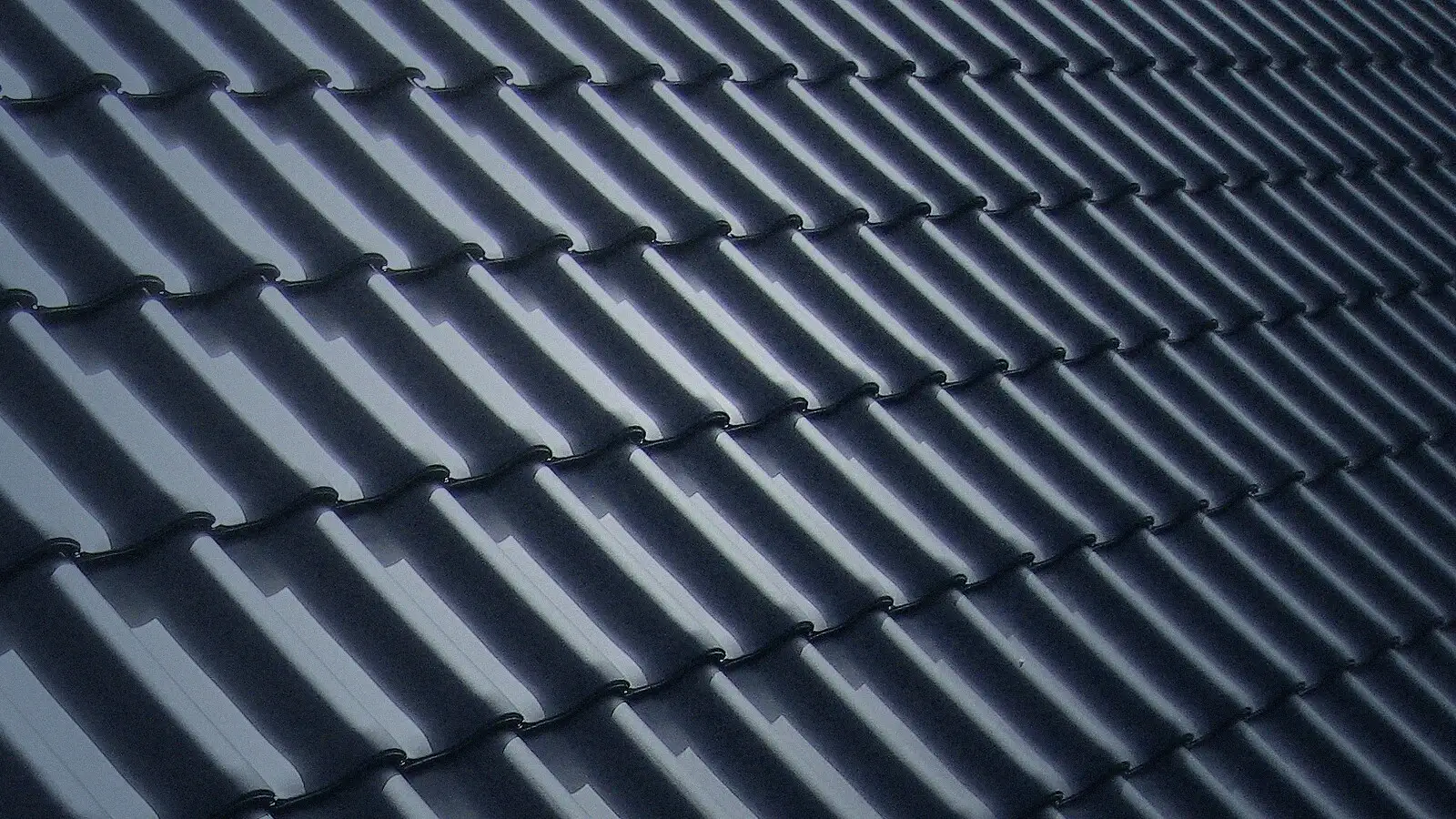
Roof replacement in Glastonbury
Glastonbury occupies the east bank of the Connecticut River and climbs from riverfront meadow into wooded hills, with orchard land on the slopes that Italian families began planting in the 1890s. Settled in 1636, the town keeps a hundred and twenty-eight acres of historic district along Main Street holding roughly a hundred structures from the seventeenth century onward. Beyond it the town is largely postwar and later: substantial houses on wooded lots, heaviest in East Glastonbury and along the south end.
What sends Glastonbury roofs into replacement
Heavy tree cover over the roof plane
The wooded lots that make East Glastonbury and South Glastonbury attractive keep sunlight off the northern slopes for most of the year. Damp shingles hold moss, moss lifts courses and holds more water still, and the cycle accelerates itself. Overhanging limbs add abrasion in wind and drop debris that packs into the valleys where it does the most harm.
Valleys doing the work of several slopes
A house with six or eight roof planes concentrates the runoff of all of them into a handful of channels. Those valleys carry more water, hold leaf litter longer and see ice earlier than anything else on the building. On these properties the valleys and the flashing beside the chimney are where the covering finishes, often several years ahead of the open field.
Cathedral ceilings with no attic above them
Where the ceiling follows the roofline there is no attic volume, and the air path is reduced to a narrow channel between the insulation and the deck. Blocked or absent, that channel leaves the sheathing warm in winter and hot in summer. The covering ages from the underside, and ice forms at the eave of the very rooms the design was meant to make pleasant.
Limbs and wind on exposed hillside lots
Higher ground east of the river takes the full force of a nor'easter, and mature hardwoods that have stood beside a house for fifty years become the immediate hazard when one arrives. Most storm work on these properties starts with impact damage rather than uplift, and impact concentrated on one slope raises the same question of whether the rest of the covering had much life left.
Replacement, not patching
Patching answers a young roof with one identifiable failure. It stops answering once the covering is into its twenties, once two layers sit on the deck, or once deterioration has spread past a small share of the area. Contractors here quote full replacement, so the first questions are age, layer count, and what has already been done.
What the assembly has to do
The large houses on the wooded eastern slopes carry roofs with a great many planes: cross gables, bonus rooms over garages, cathedral ceilings and dormers on two elevations. Roof area on these properties commonly runs well past what the floor plan suggests, and the estimate turns on the number of intersections rather than the footprint.
How a replacement runs
The order never changes; the second step does. Ask for a written scope naming the underlayment, the flashing and the rate for deck repair, rather than a figure quoted before anyone has been on the roof.
Roofing services in Glastonbury
- Roof ReplacementFull tear-off and a new covering, from what the deck looks like once the old layers are off to the ridge vent that goes on last.
- Storm Damage Roof ReplacementWind uplift, ice loading and granule scarring, weighed against how much service life the covering had left anyway.
- Roof Inspection ReportA written condition report for a carrier that has asked about your roof, a renewal file, or a house going on the market.
- Roof Age and InsuranceWhat Connecticut carriers look at, what actual cash value changes, and what a non-renewal notice is actually asking of you.
- Asphalt shingle tear-off and replacement
- Deck repair and re-sheathing
- Ice barrier, underlayment and flashing renewal
- Ridge and soffit ventilation
Areas covered in Glastonbury
Providers work across Glastonbury and the surrounding area, including Glastonbury Center, South Glastonbury, East Glastonbury, Buckingham, Hopewell and Addison.
ZIP codes: 06033, 06073.
Frequently Asked Questions
- My roof looks fine from the driveway. Is that worth anything?
- Very little on a house like this. The visible slope from the road is usually the south-facing one, which sheds and dries and therefore looks the healthiest. The problems collect on the north side, in the valleys, and around the chimney, and none of those are visible from where you park. A condition report should be written from the roof, not from the ground.
- Is a house in the Main Street historic district treated differently?
- It can be. The district covers roughly a hundred structures along Main Street, some of them very early, and where a roof contributes to the historic character the replacement may involve the town before it involves a material choice. Outside the district the ordinary permit process applies. Confirming which side of that line your address sits on takes one phone call.
- What actually goes into the written scope?
- It should name the covering going on, the underlayment and where the ice barrier runs, what happens to the flashing at every wall, chimney and valley, how deck repair will be priced if rot is found, what ventilation is being added or kept, and how the site gets cleaned. A single line reading replace roof is not a scope, whatever number sits beside it.
- Should the trees come down before the roof goes on?
- Limbs actually touching or overhanging the roof plane are worth dealing with first, because they will abrade the new covering exactly as they abraded the old one and they keep the slope from drying. Removing whole mature trees is a larger decision that belongs to you rather than to the roofing schedule. Trimming back to clear the plane usually gets most of the benefit.
- Is this repair work or full replacement?
- Full replacement. Repeat patching on a covering that is into its twenties, carries a second layer, or has deteriorated across much of its area is money that gets spent again. That is why a conversation about a Glastonbury roof begins with its age and its layer count.